
30 Beginner Table Tennis Advice
Just start playing! It's so addictive

Random Observation/Comment #931: Do physical things. It’s not a chore of “working out” if the fun activity builds muscle memory and muscles.
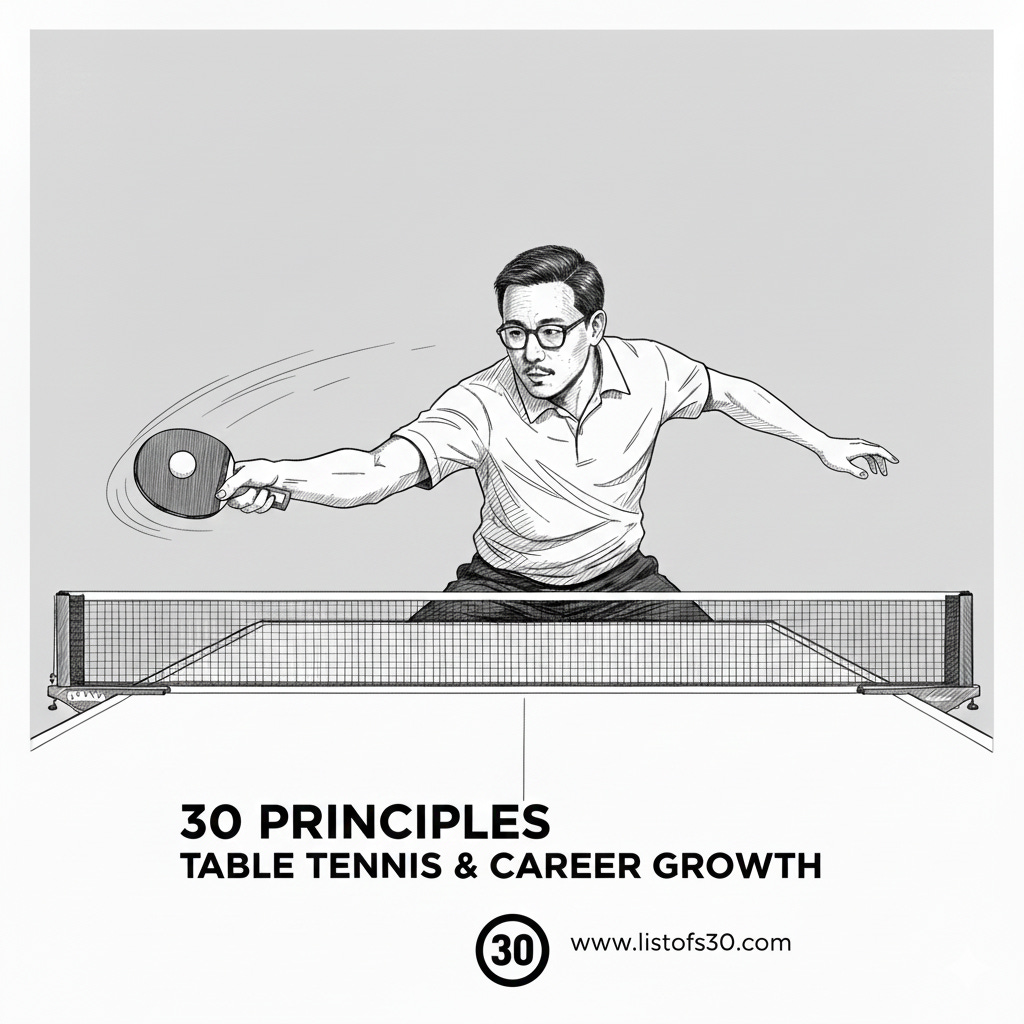
//Nano banana got me good
Why this List?
I was looking to add an article about playing table tennis to the previous lists of 30 about playing Disc Golf:

And playing poker:

To my surprise, I didn’t write one for TT (my first love)! Looking back at my old seelemons site, I realized that I only wrote a dinky non-list-of-30 blog post in 2011 before my Lists of 30 challenges. To right this wrong, here’s my advice for those who love table tennis. I don’t really get to play in-person as much anymore, but this is what I loved back in my 20s when we played at Spin NY on 23rd and took advantage of those happy hour beers and free table memberships.
Get the basics right - Everyone has their own style, but to get to the next level, you must consistently return shots and read spin. When I think about life, I am always trying to reinvent things to solidify good foundations.
Learn the game - Obviously, know the rules, but also think about the strategy. We’re all playing the same game with the same rules for fun. House rules can also apply.
Reset and be ready - Each serve comes with a sequence of expected returns. The underspin serve with a long push leading to a third ball loop. The short push return leading to a third ball flick. I’ve got a list of pretty well trained expected ball placement shots for the first 5 exchanges. In your work life, always expect the next move from your colleagues. Things will always need to work in parallel for efficient productivity.
Get into the zone (AutoZone - old joke) - Mentally visualize your win. High-level players all have shots they can make flawlessly, so it’s the strategy that separates the best. In work, block out time in your calendar for “deep work” without meeting interruptions.
Play to your strengths / Play to their weaknesses - Analyze the other person’s weaknesses and memorize the combinations that get the point. Variation in serves is what wins as you keep the person guessing what next moves will come up. In management, see everyone’s potential and give people the chance to improve on their weaknesses.
Don’t underestimate your opponent - Treat your opponent as your equal to keep the fight going. Never get complacent because of a perceived gap in skill. It’s also just a game, so you can play to not win.
Ignore the score by playing it one point at a time - Points are won one at a time. If you don’t take your lead seriously, you will lose careless points. Focus on the present task, not the mounting pressure of the deadline.
Motivate yourself - Coach yourself between points. Give yourself a pep talk to keep your energy up for a positive approach. Some players like to “cho” really loud to get their adrenaline pumping. Visualization makes a massive difference in execution.
Footwork is the foundation - You can have a world-class backhand, but if your feet aren’t in position, the shot falls apart. Get to the ball and then do the shot. In your career, “footwork” is your preparation. If you aren’t positioned correctly with the right data, your execution will be shaky.
The equipment doesn’t make the player - Master the craft before you blame the tools. You can also get too caught up in the experimentation of different blades and rubber. In tech, don’t get distracted by a “shiny new stack” if you haven’t mastered the underlying logic.
Master the short game - Sometimes a soft drop shot or a heavy push sets up the win. There’s this guy I play that likes to do the chicken wing backhand shot that gives some side-top spin. It messes me up all the time. In business, the “short game” is the small talk and networking that builds trust before the big deal.
Respect the spin - You have to account for hidden rotation. Life is full of “spin” with hidden agendas and market shifts. If you don’t acknowledge the spin, the ball will fly off the table every time.
Stay loose - Tension is the enemy of speed. A tight grip kills the “feeling” of the ball. When you’re doing your loop or backhand, you need that snap coming from the tendons rather than the brute force. Whether at the table or in a boardroom, if you’re too rigid, you can’t react to the unexpected.
Record your sessions - Watching yourself on film is a necessary reality check. Audit your own work. Self-awareness is the only real shortcut to improvement.
Remember to apologize if you hit the net or edge - Sometimes the ball clips the table edge and there’s nothing you can do about it except say “touchy”. That’s luck. Acknowledge the fluke, move on, and win the next point.
Control the middle - Attacking the “crossover point” (the opponent’s elbow) forces indecision. Musa always says “to the body” because it’s harder to move into the right direction to make the shot. In negotiations, find the friction point where the other side is most undecided.
Warm up properly - You can’t go from 0 to 100 without a warm-up. Start with basics to get the blood flowing. A few stretches makes a difference especially if you’re twisting a lot for your forehands. In work, clear the small tasks to find your rhythm before attacking high-stakes projects.
Find a coach or an equal level playing partner - You can only get so far by hitting against a robot. If you’re playing consistently with another player that’s also bad, you will also get better, but much slower. You need an outside eye to teach the proper technique. Mentorship is a requirement for those who want to lead.
Change the pace - If you play at the same speed all game, your opponent will time you and you’d get more predictable. I think it’s actually pretty important to switch things up and change tactics every game. Varying your intensity in project management prevents burnout and keeps the competition guessing.
Watch the paddle, not the ball (this is harder in VR) - The angle of the racket tells you where the ball is going before it leaves their side. I do agree that I’ve lost some of my personal sense of ball movement because I play against these bodyless VR figures. Anticipate the source of the action, don’t just react to the result.
The 3rd ball attack - This is bread and butter. The goal of the serve isn’t always an ace, but it’s to force a return that you can kill on the third hit. Your initial “pitch” should always be designed to set up your “close.”
Recover quickly - After a big smash, the best players reset to a neutral position instantly. Going back to the center will let you get ready for the next attacks. After a big win or loss at work, get back to neutral so you don’t become lazy or discouraged.
Vary your serves - The best serve is the same motion with different contact points to drastically change the spin. Diversity in your “opening move” is a massive competitive advantage.
Listen to the sound (easier in-person) - The “bok” of the ball tells you if you hit the sweet spot when the rubber grips it just right. This is also useful for services (and a big source of my stomping pain because I thought it was the right thing to do when hiding the contact sound). Develop an “ear” for your industry so you can hear when a project is going off the rails before you see the data.
Play the long game - A match is a marathon of sprints. Don’t get discouraged by losing a set. Resilience is super valuable for all things in life.
Mind your stance - A wide, low base gives you the power to move in any direction. Build a broad skill set so you can pivot when the market moves.
Respect the referee/coach - If you get to this point, then you’re probably playing pretty seriously Remember to shake the hand of the player, referee, and coach after a game. Also, arguing rarely changes the outcome and only disrupts your focus. For work, the “umpires” of the corporate world are legal, HR, and compliance. You need them on your side.
Celebrate the process, not just the trophy - The joy is getting better and growing closer with friends. If you only enjoy the victory, you’ll spend 99% of your time unhappy.
Know when to take a timeout - A 60-second break can save a 20-minute match. Recognize when you’re “tilted” or frustrated, and step away from the keyboard to reset.
Leave it all on the table - When the game is over, shake hands and be proud of the effort. Drink some beers and hang out. It’s the best. Give every project your maximum intent so you never have to ask “what if?”
~See Lemons Love Table Tennis


